Get Connected
What is a Teaching Health Center Residency?
A Teaching Health Center is an accredited medical or dental residency program in which trainees spend time training in health centers.

Teaching Health Center Graduate Medical Education (THCGME) programs include THCGME medical and dental residency programs operating in community based ambulatory patient care settings that are accredited by the Accreditation Council for Graduate Medical Education (ACGME) or the Commission on Dental Accreditation (CODA). THCGME programs train residents in community-based outpatient settings, producing physicians and dentists who will practice in settings with dentist and physician shortages.
Featured Story
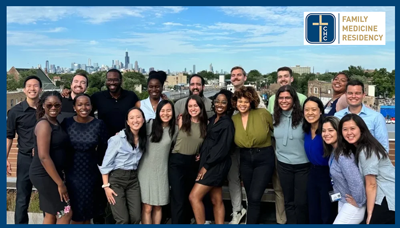
The Lawndale Christian Family Medicine Residency (FMR) is a distinguished teaching health center-based program in Chicago, Illinois. As one of only a few teaching health centers in the state and independently sponsored by a community health center, its community-based training model prepares family medicine physicians to serve and advocate for medically underserved populations. Through integrated care and partnerships with Lawndale Christian Health Center, Mount Sinai Hospital, and Saint Anthony Hospital, Lawndale FMR trains residents to provide high-quality, compassionate care that meets the needs of the communities they serve.
Interested in THCGME
Teaching Health Centers are a critical tool in recruiting and retaining future physicians and dentists who will work in community-based outpatient settings (community health centers, federally qualified health centers and look-alikes, rural health clinics, and tribal health centers) to serve populations that lack sufficient access to dentists and physicians. The Teaching Health Center Graduate Medical Education (THCGME) program provides community-based residency training anchored in health centers as opposed to the traditional model of hospital-based training. Evidence shows THCGME graduates are more likely to practice close to their training sites and in rural areas, to maintain a broader scope of practice, and to focus on patients who have had limited access to care.
What are the steps to starting and sustaining a THCGME residency program?
No matter where you are in your journey of developing or operating a community-based residency program, we have guidance for you. Create an account and login to our THCGME.org portal to access our frameworks for medical and dental teaching health center residency program development and vitality.
Our Roadmaps for Teaching Health Center Medical and Dental Program Development highlight 5 key stages: exploration, design, development, start-up, and maintenance. Our Rural and Underserved Residency Program Vitality Index provides a structured framework for maintenance of a healthy, thriving residency program based on eight key program goals. These frameworks provide additional detail on each step to support the development and vitality of a functional, accredited, and financially sustainable program.
What funding is available to support Teaching Health Center (THCGME) residency development?
Funding for the THCGME program is authorized by Congress to cover the costs of training medical and dental residents in community-based clinics. Eligible specialties include family medicine, internal medicine, pediatrics, internal medicine-pediatrics, obstetrics and gynecology, psychiatry, general dentistry, pediatric dentistry, and geriatrics. Notices of Funding Opportunities (NOFOs) are periodically posted to Grants.gov.
Programs may consider other state or federal sources to support start-up costs associated with establishing a community-based program. Planning and development grants may help offset costs associated with development including accreditation costs, faculty development, resident recruitment, faculty, and administrative staff.
Current and New Grant Recipients
The TAC provides technical assistance, tools, and resources to current and future grant recipients to help community-based residency programs overcome the significant challenges and barriers involved in accreditation maintenance, strengthening program operations, and developing additional training slots. Support is offered in many ways, including:
- Matching each grant recipient with an experienced advisor to create personalized action plans
- Offering individualized, in-depth consultations, when needed, through our preferred partnered consultant organizations
- Hosting monthly webinars on topics such as financial sustainability, faculty, resident recruitment, and more
- Providing resources, slides, and webinar recordings on the Portal for easy access
- Hosting an annual grant recipient meeting where all grant recipients, advisors, and partners come to network and learn from each other
Key Resources

Teaching Health Center Graduate Medical Education (THCGME) Technical Assistance Center Roadmaps
Use the roadmaps to understand each step in building a functional, accredited, and financially sustainable program, along with a structured framework of measurable goals that support long-term stability, continuous improvement, and program

Teaching Health Center GME Portal
Login and register for a free account! The portal is open to THCGME grant recipients and others interested in teaching health center graduate medical and dental education.
THCGME & NACHC Primary Care Association (PCA) Connection Tool by State
The Teaching Health Center Graduate Medical Education-Technical Assistance Center (THCGME-TAC) and the National Association of Community Health Centers (NACHC) developed this Primary Care Association (PCA) Connection Tool for health centers and those interested in workforce development to connect with state PCA workforce leaders. Browse each state to identify PCA organization, CEO, and staff information.
Frequently Asked Questions
Program vitality is the ongoing work of keeping an operational Teaching Health Center residency program healthy, stable, and true to its mission. The Rural and Underserved Residency Program Vitality Index gives programs a structured framework with specific, measurable goals and objectives in eight areas:
- recruiting mission-aligned residents
- maintaining accreditation
- ensuring financial solvency and healthy governance
- continuously improving the program
- recruiting and retaining faculty and leadership
- tracking outcomes
- promoting community engagement
- pursuing scholarship
Programs can routinely assess their health and prioritize investments in each of these areas to help them stay stable over the long term, keep improving, and continually work toward excellence.
For individuals looking to connect with Teaching Health Center residency programs to express interest in trainee or faculty/staff positions, please visit our Program Profiles page to identify programs across the country. Please also visit the HRSA Bureau of Health Workforce Workforce Connector to identify posted positions at a Teaching Health Center near you.
For Teaching Health Center residency programs looking to recruit new trainees or faculty and staff, we invite you to visit the HRSA Bureau of Health Workforce Workforce Connector to post open positions, as well as check out additional tools and resources which aid with program recruitment in our THCGME.org portal Toolbox.